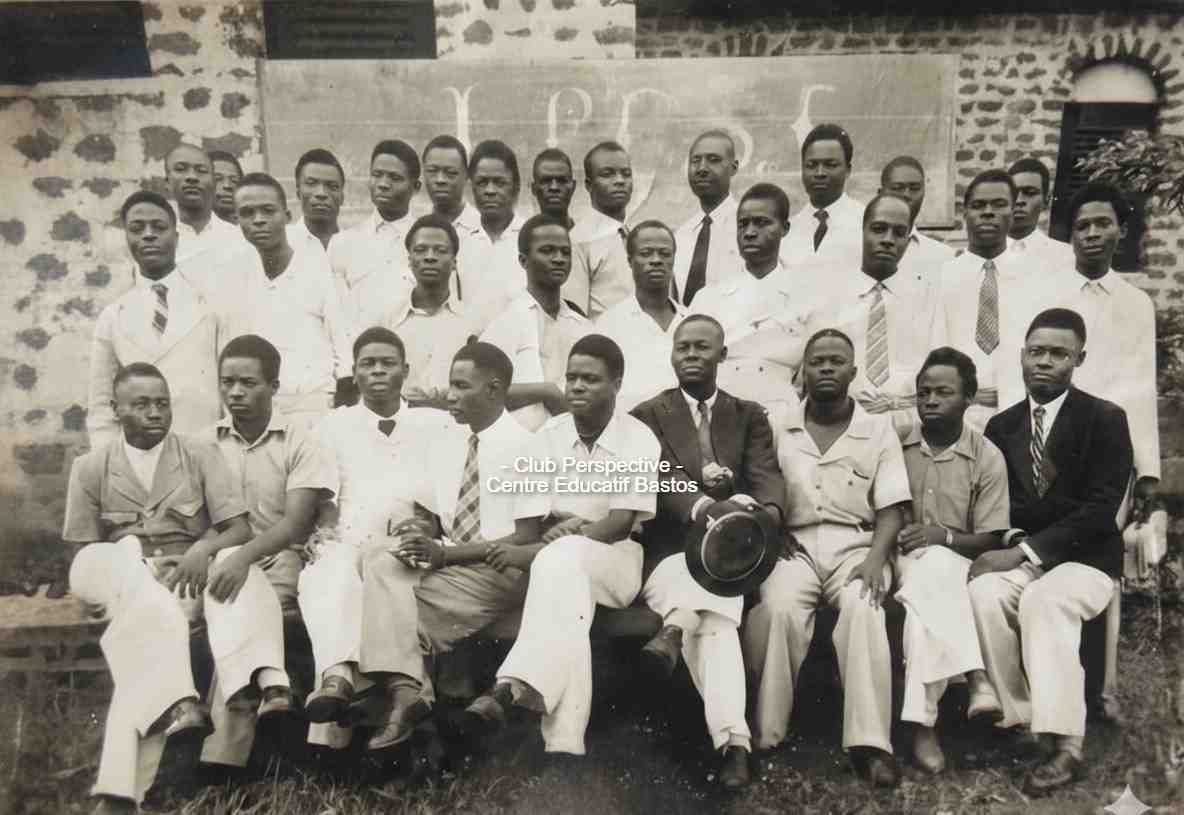
Marienberg : The genesis of the Catholic school in Cameroon.
The Pallottine Missionary Era 1890-1915
The creation of the first Catholic school in Marienberg .
When the Pallottine Fathers arrived in Douala on the night of October 24 to 25, 1890, they were greeted by a malevolence that did not seek to conceal itself. This malice manifests itself at all levels. The German governor Von PUTTKAMER does not want to see the Pallottines settle in Douala which he considers as a Protestant denominational zone. The Protestant missionaries of the Mission of Basel, of Swiss-German obedience, do not suffer from seeing their Catholic counterparts gaining a foothold in this city where they exercised until then without sharing.
To prevent any contact between the Catholic missionaries and the natives, the Protestant pastors made it known to the natives that the newcomers who dressed like women—because they wore cassocks similar to women's dresses—diminished the fertility of all those who approach them. It was enough for the natives to avoid the new missionaries like the plague. It was then that, thanks to the moral and material assistance of the famous merchant Edouard WOERMANN based in Douala, the Catholic missionaries decided to go to Edéa to begin their apostolate.
Difficulties of travel and the hostility of the populations of Edéa manipulated by the Protestants will lead the Fathers to settle on a small site of hill that will grant them the Chief TOKO NGANGO of Elok NGANGO. It is this small hill site that will take the name of Marienberg, that is to say ,hill of Mary. On December 8, 1890, this first mission in Cameroon was dedicated to Mary Queen of the Apostles. As a result, the entire Church of Christ which had just been born in Cameroon was placed under the protection and patronage of the Blessed Virgin Mary. The Pallotine missionaries very early showed concern for the education of young people and for good reason. It was the youth who would found the Church of tomorrow. These young people were to constitute the ferment of the evangelization of the country. But whoever says evangelization, says progress and evolution of peoples.
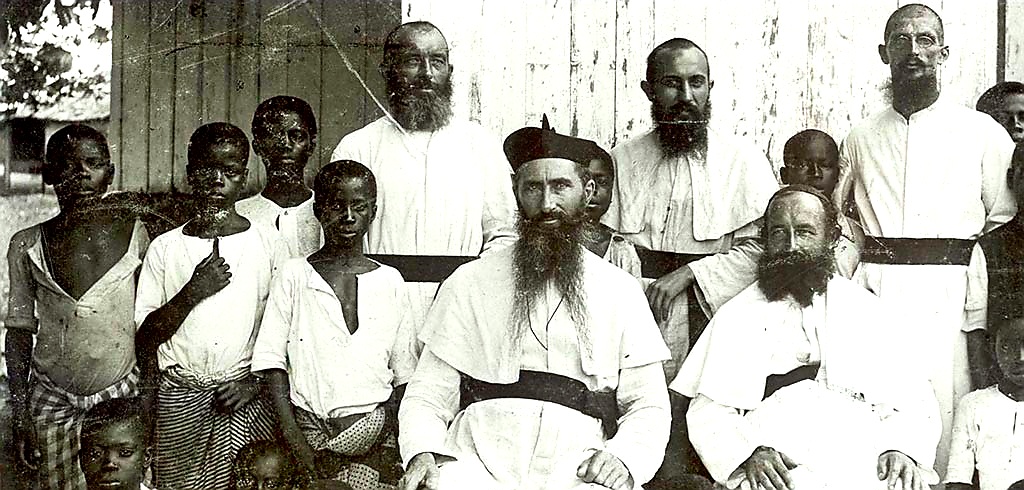
Father Heinrich Vieter and Pallotin Fathers
The Cameroonian Christian youth, in the opinion of the Pallottines, was therefore the hope on which the progress of our country rested. Thus, in 1891, the missionaries set up a first school in Marienberg. But the parents were not prepared to let their children go to acquire education within this new institution, because if on the coast, the missionaries were accused of threatening the fertility of the natives, in Marienberg, the populations were worried because the Fathers and Brothers did not want to marry or at least live with women.
From then on, the question arose as to whether the missionaries were not going to instil these habits in the young students called to follow their formation at the mission school. Father VIETER, Apostolic Prefect and Head of the delegation of this first team of missionaries had many talks with Chief TOKO NGANGO, who in the end agreed to entrust two of his own children to the missionaries. André and Jacques thus became the first students of the first Catholic school in Cameroon. The example having been given by the chief himself, the other parents agreed to let their children come to school. Thus, in October 1891, the school of Marienberg recorded forty registrations of pupils coming both from the surrounding area and from regions quite far from the mission.
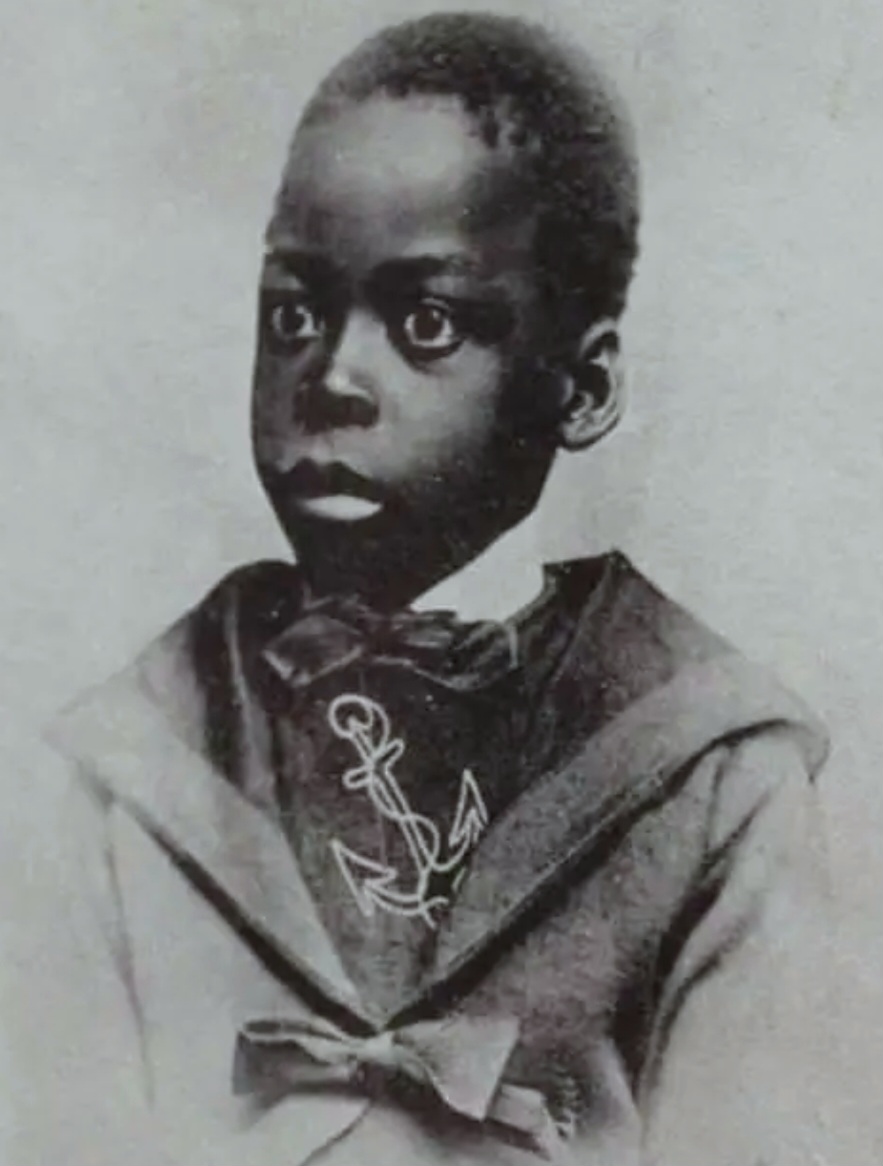
Prince Andreas Toko 1893
This small team of teachers will join some time after André MBANGUE who was not only the first Cameroonian Catholic, but also the first monitor and the first indigenous catechist in Cameroon.
Sources : - Jean Paul Messina Catholic Education in Cameroon 1890-1990 .
- school-stories : www.educatii.com